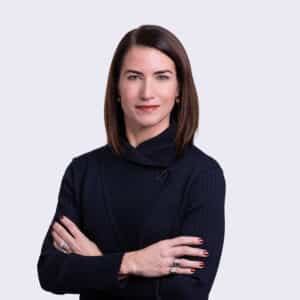
Talent is everywhere, access is not: Russell Johnstone on purposeful trusteeship
For Russell Johnstone, trusteeship is where senior commercial judgment meets social purpose. With a career advising some of the UK’s most prominent consumer, media and technology businesses, including as General Counsel for BT’s Consumer division, he now brings board-level judgment, regulatory fluency and commercial discipline to three organisations united by a powerful idea: talent is everywhere, but access is not.
Russell is a Trustee of the Social Mobility Business Partnership, Social Tech Trust and Richmond Theatre Trust. Between them, the organisations help young people from low-income backgrounds access career opportunities, support technology and innovation that can improve social outcomes and widen access to the performing arts.

While their work may look very different, Russell sees a clear connection.
“For me, the common thread running through all three is access – whether to people, experiences, opportunities or, in some cases, financial support. I know the phrase is often used, but it is true: talent is everywhere; access is not.”
That focus is both professional and personal. Growing up in Glasgow, Russell benefited from programmes similar to those run by the Richmond Theatre Trust, which opened up theatre, music and performance to people who might otherwise have been excluded. And now trusteeship allows him to apply strategic and commercial experience built over decades to organisations creating opportunities for others.
A GC’s judgment, not just a lawyer’s expertise
Russell’s value in the boardroom is rooted in the breadth of his General Counsel experience. Advising across BT, EE and Plusnet, meant operating in an environment shaped by competition, regulation, customers, technology, complex partnerships, multi-£bn disputes, media scrutiny and political and public expectations.
Russell believes the two roles have an important similarity: both require judgement in deciding not only what the organisation can do, but what it should do. He clarifies,
“A good General Counsel is never just a lawyer. The role is often about helping an organisation make sound decisions – strategically, commercially, reputationally and ethically, often when there is no straightforward answer.”
For Russell, this is particularly relevant to trusteeship because boards need to help organisations pursue their ambitions while applying appropriate challenge and oversight.
Russell brings the discipline to identify what matters, test assumptions and expose risk without allowing caution to become inertia. His questions are deliberately simple and demanding: what are we trying to achieve, what might go wrong, who will be affected, and could we justify the decision afterwards?
For charities balancing ambition with limited resources, this combination of commercial realism, constructive challenge and decisiveness is particularly valuable. Russell’s contribution is not to make organisations risk-averse, but to help them be bold without being careless.
Guiding change without taking over
One of Russell’s clearest examples is at Social Tech Trust, where he is Vice-Chair and Chair of the Audit Committee
He supported the organisation through a significant strategic transformation from a traditional grant-making model towards VC-style impact investing. This shift called for rigorous oversight of governance, financial resilience, risk, control and regulation, alongside constant attention to the charity’s purpose. Russell was able to draw on deep experience of complex organisations, regulated environments, risk management, partnerships and strategic change.
However, he was careful about the role Trustees played in that process, revealing,
“The Trustee role there was not to design the new model, but to help make sure the right questions were asked about risk, control, regulation, and resilience and to test whether the new structure stayed true to the charity’s purpose.”
Chairing the Audit Committee sharpens that responsibility. It requires Russell to turn complex financial, regulatory and operational issues into focused board-level scrutiny, while maintaining sight of the organisation’s strategic ambition. The objective is not control for its own sake, but confidence: confidence that the organisation can innovate, deploy capital responsibly and sustain its impact.
Stewardship without stepping into management
Senior lawyers are accustomed to being closely involved in complex business decisions. As a Trustee, Russell applies that experience with restraint. He describes the role as one of stewardship: supporting and challenging the executive team, protecting the mission and helping the board reach sound decisions without becoming a shadow executive or an alternative source of free legal advice.
This balance matters. The strongest Trustees do not demonstrate their value by taking over. They create the conditions in which executives can lead effectively.
“Across all my roles, I hope the impact is to help organisations be ambitious, hold their nerve when necessary and keep their focus on the people they are there for.”
Choose something you will still care about on a difficult day
For General Counsel considering trusteeship, Russell’s advice begins with purpose. Board service brings real responsibility, so personal connection to the mission helps sustain engagement when time is scarce and decisions are difficult.
“A good test is whether you would still care about the issue on a dark and wet autumn evening after a long week.”
For General Counsel, trusteeship can be a natural extension of an already broad leadership role. But legal and boardroom experience are only part of what makes someone effective.
Russell recalls advice from the former Chair of Social Tech Trust when he first started: the first duty of Trustees is to “turn up AND show up”. In his own words,
“That means arriving prepared, remaining curious and contributing with humility, not simply relying on professional status or past experience.”
That combination of experience and openness runs throughout Russell’s approach to trusteeship. The value is not in arriving with every answer. It is in knowing which questions to ask, when to challenge, how to support executive teams and how to keep the organisation focused on the people it ultimately exists to serve.
Interested in becoming a Trustee? Join the Taylor Root Trustee Network to access opportunities, resources, and a community of likeminded professionals ready to make a difference.
Author