Living and working in Australia: a guide for UK and Ireland lawyers
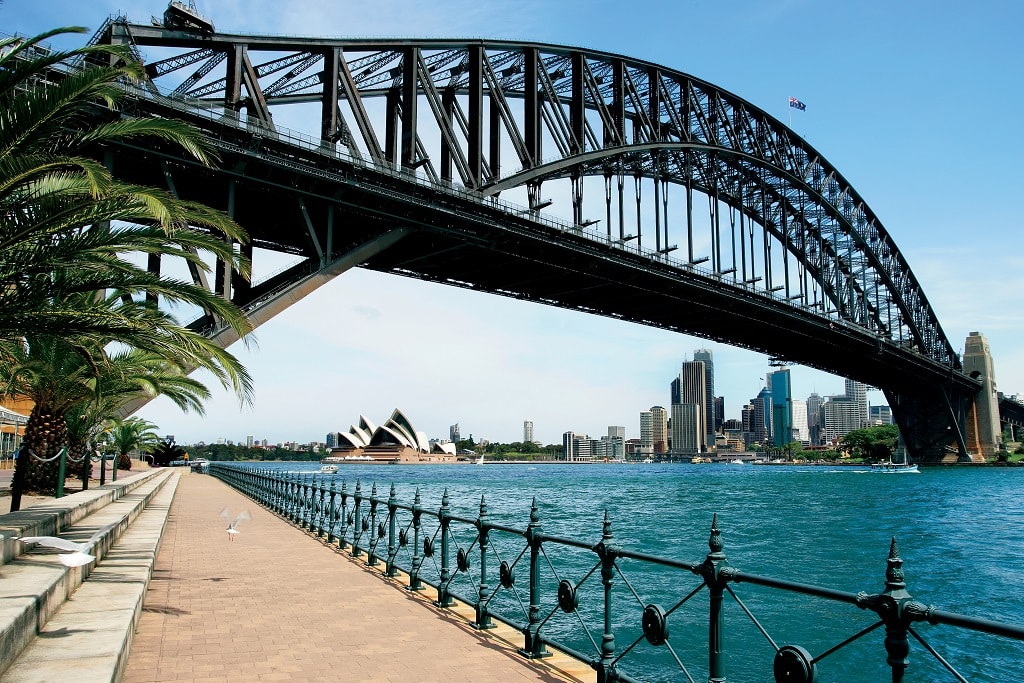
Are you an overseas qualified lawyer looking for a career more to Australia?
Our experienced team is well-connected and expertly placed to help you relocate your career to Australia.
Australia is a well-trodden path for British and Irish lawyers. For those looking for an international experience that combines a new adventure with excellent career opportunities, Australia has similar legal systems, a low barrier to entry for visas and a large and successful economy.
Whether you are seeking to move to Sydney, Melbourne, Brisbane, Perth, Adelaide or Canberra, Taylor Root’s international career management team can provide you with in-depth insight into the Australian legal landscape as well as assist you with visa, immigration, and relocation information.
Why Australia?
Australia continues to attract lawyers from the UK and Ireland for several reasons:
A familiar legal system
Australia’s common law foundation makes the transition smooth for UK and Irish qualified lawyers.
Strong economic performance
Australia’s economy remains resilient and diverse, spanning financial services, energy, infrastructure, technology, and rapidly expanding ESG‑related sectors.
Career opportunities
Major Australian cities host top‑tier, mid‑tier, international, and boutique firms with demand across multiple practice areas including corporate, disputes, banking, energy, construction, infrastructure, competition, employment, technology, environmental law, cyber, and ESG.
High quality of life
Australian cities consistently rank among the best places in the world to live, offering excellent healthcare, education, stability, and lifestyle benefits.
Visas: the routes most lawyers use
Employer‑sponsored (the main route): Australia has modernised the old TSS system with the Skills in Demand visa (subclass 482). It retains sponsorship by a firm but now has clearer streams (Core Skills, Specialist Skills and labour‑agreement) and more transparent pathways to permanent residence.
Salary thresholds to note: For Core Skills nominations, the income threshold is AUD $76,515 for applications lodged between 1 July 2025 and 30 June 2026; employers must also meet the market‑rate test. Read more here: salary requirements to nominate a worker.
Working holiday stepping‑stones
- UK passport holders (18–35): up to three Working Holiday (subclass 417) visas with no specified‑work requirement for the second/third visas from 1 July 2024.
- Irish passport holders (18–35): Working Holiday (subclass 417) remains available; second/third visas still require specified work.
We’ll happily talk you through which firms typically sponsor in your practice area.
Taxation, take‑home and the Medicare levy
If you’re a tax resident (a tax concept, not the same as visa status), for the FY2025–26, you will pay no tax on the first $18,200 of income, then 16% on income between $18,201 and $45,000, 30% between $45,001 and $135,000, 37% between $135,001 and $190,000, and 45% on income above $190,000. These rates exclude the 2% Medicare levy, which most residents pay unless they qualify for a reduction or exemption. View the full tables here: ATO—Australian resident tax rates.
If you’re a non‑resident for tax, you’re taxed at 30% up to $135,000; 37% to $190,000; then 45% above $190,000, and you don’t pay the Medicare levy. See ATO—foreign resident tax rates for the current scale.
Superannuation and benefits (and what good packages include)
Superannuation is the Australian equivalent of your employer pension and is compulsory. Your employer must pay a set percentage of your salary (currently 12%) into a super fund, which then invests that money on your behalf. You can also top it up yourself and there can be tax advantages for doing so. You can confirm settings here: ATO—Super guarantee. If you eventually leave Australia on a temporary visa, you can usually claim your super via the Departing Australia Superannuation Payment (DASP) process (tax applies to the payment components).
Australia’s Government‑funded Paid Parental Leave (PPL) is expanding to 26 weeks by July 2026 (it’s currently 25 weeks). A significant update from 1 July 2025 is that the Government will also pay 12% superannuation on Government PPL (paid to your fund after year‑end processing). The policy detail is explained in the Prime Minister’s media release on PPL changes and Services Australia—Paid Parental Leave scheme changes.
Accommodation and cost of living: what to budget
Most relocating lawyers start with two to four weeks in a serviced apartment and secure a longer‑term rental in person. Rents are city‑ and suburb‑specific, but as a January 2026 snapshot: Sydney medians around $900/wk for houses and $760/wk for apartments; Melbourne around $570/wk (houses) and $580/wk (apartments); Brisbane around $700/wk (houses) and $675/wk (apartments). These are advertised medians; your actual rent will vary by location and property type.
Getting around: public transport and driving
Public transport is straightforward and largely cashless. Sydney/NSW uses Opal (contactless cards and phones also work for Adult fares), Melbourne/Victoria runs on myki (including mobile myki on Android), and Brisbane/South East Queensland uses the go card (covering trains—including Airtrain—buses, ferries and trams).
Driving is common, but licence conversion rules differ by state and by your visa or residency status (this has changed since older six‑month “catch‑all” advice). In NSW, permanent residents convert within three months, while temporary visa‑holders who intend to live in NSW six months or more must convert within six months (see Service NSW—transfer an overseas driver licence and the NSW rules FAQ). In Victoria, convert within six months if you’ll live there more than six months. In Queensland, convert within three months of becoming a resident.
Healthcare: how Medicare fits into the picture
Australia’s public system, Medicare, is funded in part by the 2% levy. If you’re new to the system, it helps to know that the UK–Australia reciprocal healthcare agreement provides access to medically necessary care for short stays; longer‑term residents typically enrol in Medicare and often add private hospital cover to avoid the Medicare levy surcharge at higher incomes. You can read the system overview at Services Australia—Medicare and tax.
Banking before you land
It’s common to set up an Australian bank account from overseas and then complete ID checks in‑branch after you arrive (you can usually deposit funds, but you won’t have full access until you verify your identity). Two popular newcomer options are Commonwealth Bank and Westpac. For neutral guidance on documents and timing, Expatica’s guide to opening an account is a helpful reference.
Admission: practising locally vs registering as a foreign lawyer
If you want to practise Australian law (beyond registering as a foreign lawyer), you’ll need your qualifications and practical legal training assessed by the relevant board in your destination state.
In NSW, this process is managed by the Legal Profession Admission Board (LPAB) and in Victoria, the Victorian Legal Admissions Board (VLAB) applies the Uniform Principles for Assessing Overseas Qualifications to set out your exact requirements.
The authority will confirm the steps you are required to take, and most commonly for UK and Irish lawyers seeking Australian admission there will be:
- A qualification assessment comparing the LLB/GDL/SQE/LPC/Irish training to Australian academic subjects
- Confirmation of which Australian‑specific law subjects you must complete, commonly constitutional, administrative, property, evidence and ethics
- A Practical Legal Training (PLT) equivalence assessment; experienced lawyers may receive exemptions. If you are required to complete certain modules, they are generally easy and short online workshops that are completed over the course of a few weeks. Most Australian lawyers complete the PLT whilst working fulltime as the requirements are not onerous
- English testing (may be formally required but is often waived)
- Final requirements that depend heavily on individual PQE and recency of practice
The Australia–UK Free Trade Agreement did not introduce automatic mutual recognition, so the standard assessment process still applies. The agreement is in the process of being negotiated with a view to making it easier for lawyers to practice across the two jurisdictions.
Working as a lawyer in Sydney
Sydney is Australia’s largest legal market and the country’s financial and economic hub. It is home to major domestic and international law firms and the headquarters of the country’s largest banks, financial institutions, ASX‑listed companies and global businesses.
Economy and sectors
Sydney’s economy spans financial services, real estate, tourism, technology, creative industries and a thriving innovation ecosystem, including fast‑growing biotech, fintech, and cybersecurity sectors.
Legal market
Top firms including Herbert Smith Freehills Kramer, King & Wood Mallesons, Allens, Clayton Utz, MinterEllison, Corrs Chambers Westgarth, Ashurst, Gilbert + Tobin and Norton Rose Fulbright operate large teams in the city, and US and transatlantic firms have a growing presence. There is ongoing demand for talented lawyers across corporate, banking, disputes, energy, projects, construction, regulatory, environment, and technology-related practice areas.
Lifestyle
Sydney is known for its beaches, harbour lifestyle, outdoor culture, and excellent food scene. Firms often offer flexible working, well-being benefits, and strong work‑life balance initiatives.
Cost of living
While Sydney is Australia’s most expensive city, it remains more affordable than many global cities such as London, New York, and Singapore.
Climate
Expect mild winters and warm summers with year-round sunshine.
Working as a Lawyer in Melbourne
Melbourne is Australia’s cultural capital and a major commercial centre with a sophisticated and diverse legal market. It offers a slightly more relaxed pace than Sydney while still providing excellent career opportunities.
Economy and sectors
Melbourne’s strengths lie in financial services, technology, health and life sciences, infrastructure, energy, manufacturing, arts, and creative industries. It is also a hub for major public sector work due to the Victorian Government’s extensive regulatory and infrastructure agenda.
Legal market
International, top‑tier, and mid‑tier firms all have large practices in Melbourne, with particular demand across corporate, commercial, employment, litigation, projects, construction, technology, and regulatory work. Government‑related roles are more prominent here than in other Australian cities, other than Canberra.
Lifestyle
Melbourne consistently ranks highly globally for liveability. It is renowned for its cafés, restaurants, arts scene, sporting culture, and neighbourhoods with distinct character. Many lawyers enjoy shorter commutes compared to Sydney.
Cost of living
Generally lower than Sydney, especially in relation to housing.
Climate
Melbourne’s weather is famously changeable, with cool winters and warm summers, but an excellent year-round events calendar.
Working as a lawyer in Brisbane
Brisbane is one of Australia’s fastest-growing cities and an increasingly attractive destination for overseas-qualified lawyers. It offers strong career prospects alongside a warm climate and a more relaxed lifestyle.
Economy and sectors
Brisbane’s economy is driven by energy, natural resources, construction, infrastructure, technology, life sciences, transport, and tourism. Significant infrastructure investment is underway as the city prepares to host the 2032 Olympic Games.
Legal market
Brisbane’s legal market includes strong national firms, international firms, and high-quality mid‑tier practices. There is particular demand for lawyers in construction, infrastructure, energy and resources, planning, disputes, commercial, and environment.
Lifestyle
Brisbane is known for being friendly, outdoorsy, and more affordable than Sydney or Melbourne. The city has easy access to the Gold Coast, Sunshine Coast, beaches, rainforests, and national parks.
Cost of living
Generally lower than both Sydney and Melbourne, especially in rental and property markets.
Climate
Subtropical climate with warm, humid summers and mild, dry winters.
Interested in learning more about working as a lawyer in Australia?
Whether you’re ready to take the next step or simply curious to learn more about opportunities in Australia, feel free to reach out to a member of our team.
If you’re currently in Ireland, reach out to our Dublin team.
If you’re in the UK, reach out to our London private practice team.